
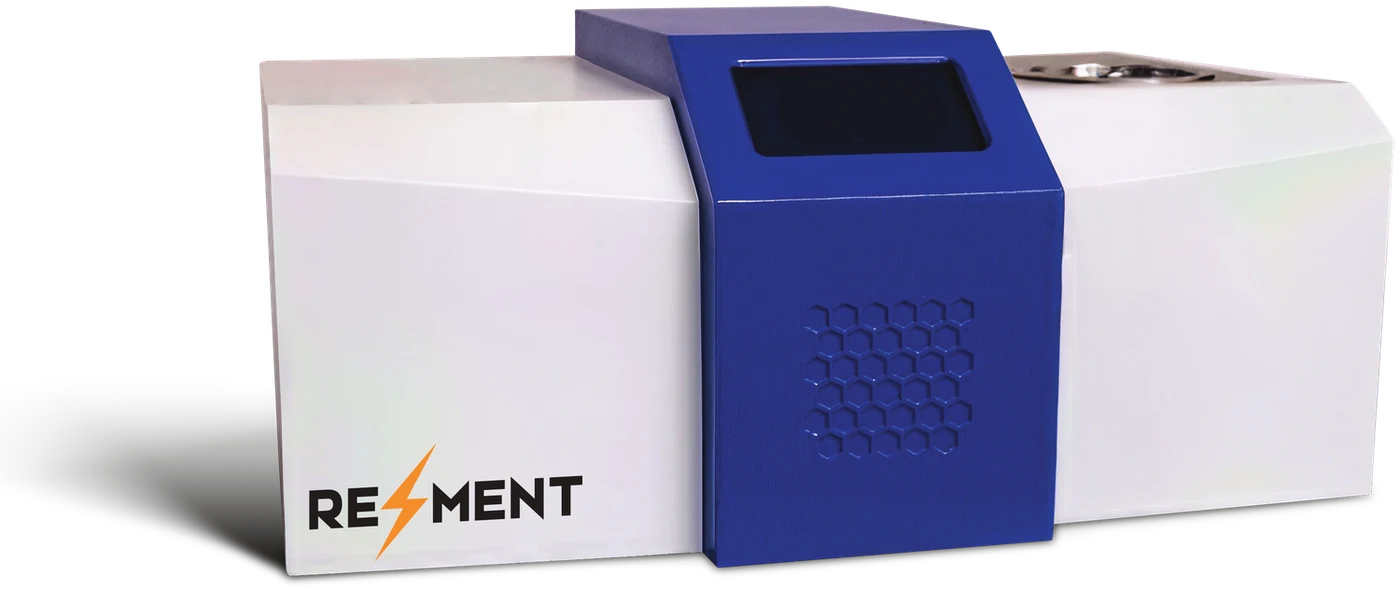
DSC
How much energy does this transition take?
Glass transition, melting, crystallisation, enthalpy, purity and oxidation induction time.
DSC instrumentsResment Solutions LLP manufactures differential scanning calorimeters, thermogravimetric analysers, simultaneous thermal analysers and thermal conductivity systems — engineered in Chennai by people who spent two decades running these measurements before they started building them.
Thermal analysis is not one measurement but a family of them. Which instrument you need depends on what you are actually trying to find out.
Glass transition, melting, crystallisation, enthalpy, purity and oxidation induction time.
DSC instruments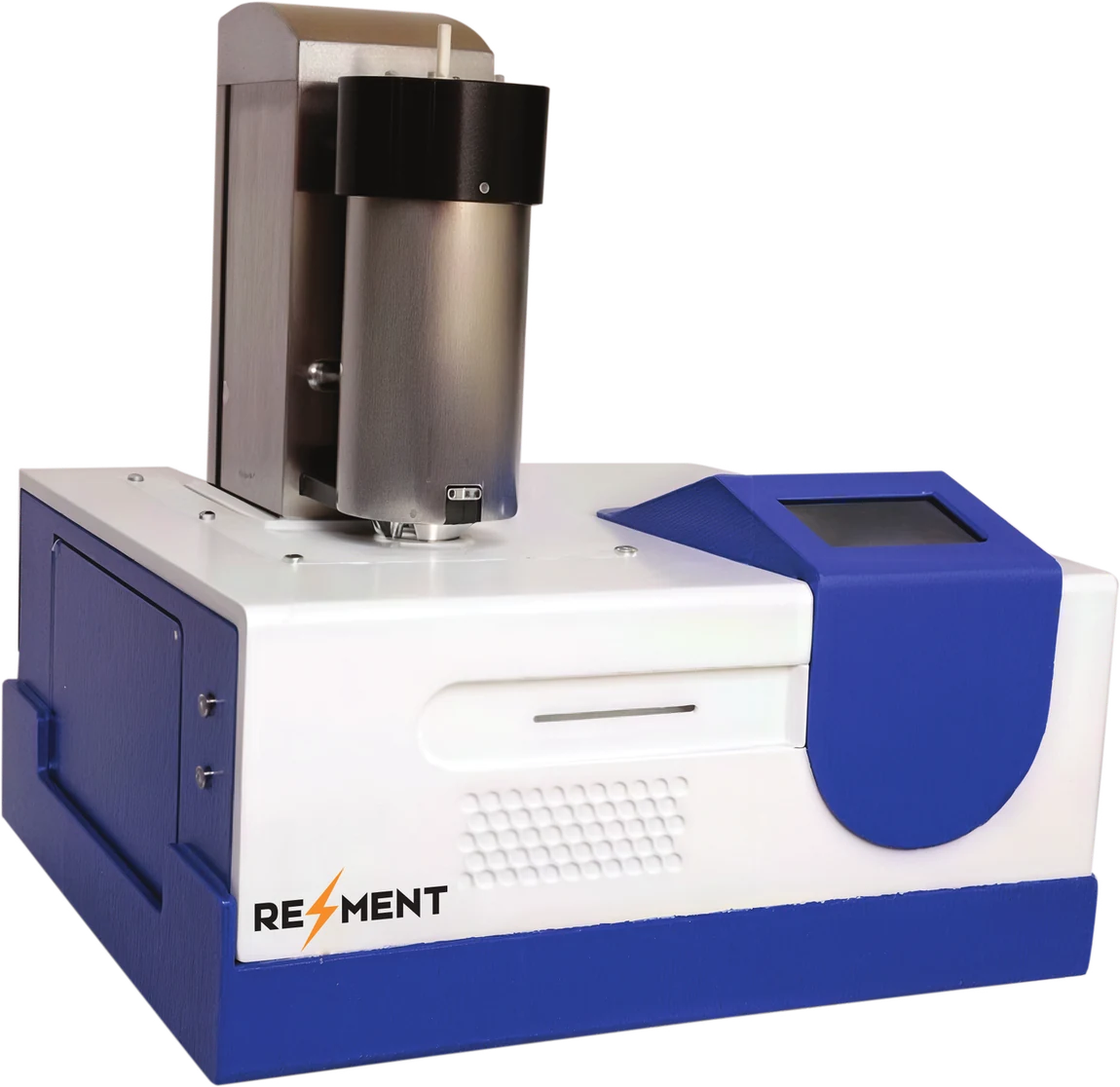
Moisture, filler and carbon-black content, decomposition onset, thermal stability, ash.
TGA instruments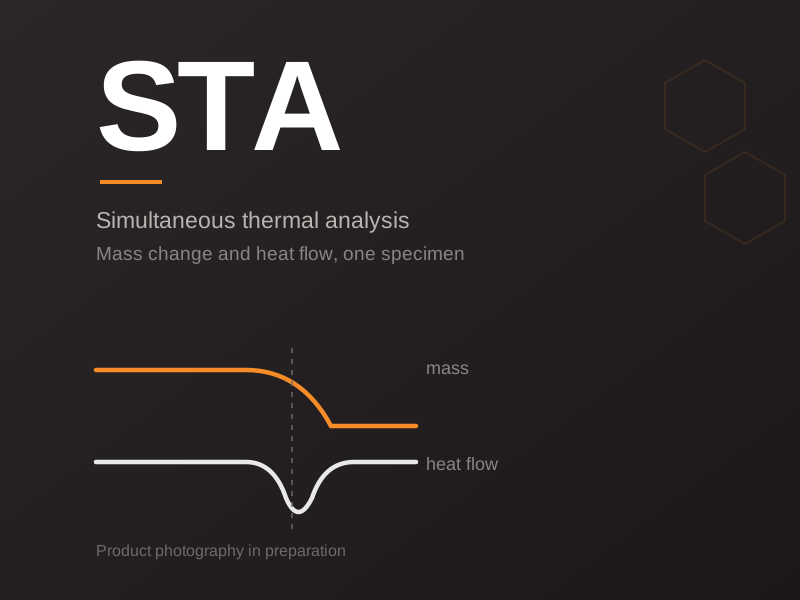
An endotherm alone cannot tell you. Mass and heat flow, same specimen, same run.
STA instruments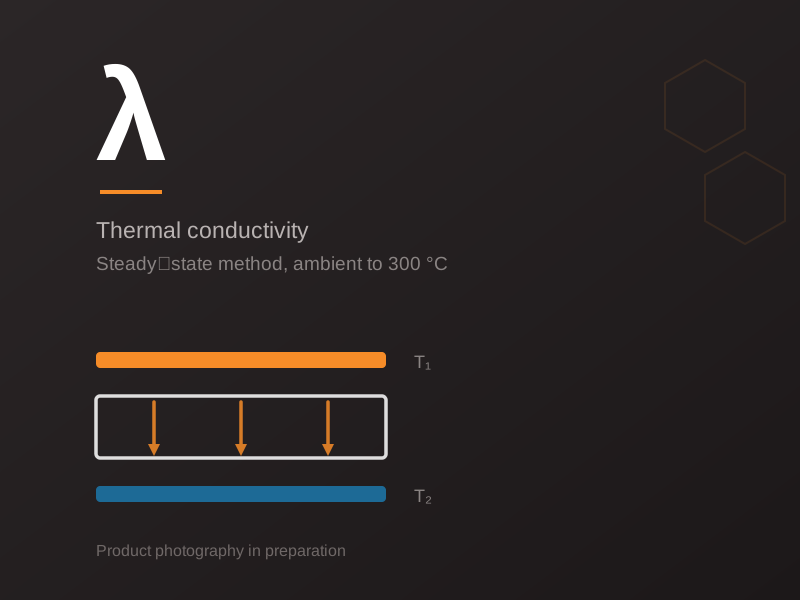
Steady-state λ for solids, powders and insulation, measured at working temperature.
Conductivity instrumentsRun a polymer from ambient to melt and the trace tells you its history in order: the baseline step where the amorphous fraction unfreezes, the exotherm where chains that were quenched into disorder find their lattice, the endotherm where the crystallites finally give way. Each feature carries a number you can defend — a transition temperature, an enthalpy from the integrated peak area, a crystallinity ratio. The instrument's only job is to resolve those features cleanly enough that the numbers survive scrutiny.
We spent twenty years on the other side of the bench — installing thermal analysers, commissioning them, calibrating them, and being called back when they drifted. Resment is what we built once we understood which parts of that actually matter.
The people behind Resment Solutions LLP came up through analytical instrumentation in India — supplying, installing and servicing thermal analysis systems for pharmaceutical, academic and industrial laboratories, and running customer samples on them week after week.
That a laboratory rarely loses time to the specification on paper. It loses time to a baseline that will not settle, a furnace that takes a season to get a spare for, and an engineer who is a continent away. Those are design problems, not service problems.
Resment instruments are assembled, calibrated and supported by the same people who answer the phone when a measurement looks wrong. Nothing about that arrangement requires an import licence.
Thermal analysis in India has long meant buying a foreign instrument and then waiting — for delivery, for a visiting engineer, for a part that has to clear customs before it can be fitted. Manufacturing locally takes the waiting out of the equation.
Instruments are built to order in Chennai. There is no ocean freight leg and no customs clearance between our bench and your laboratory.
Installation, calibration and repair are handled directly by Resment, with parts held in India — not escalated to an overseas principal and queued behind other territories.
Quoted and invoiced in rupees, with no import duty stacked on top and no currency movement between your purchase order and your delivery.
A different furnace ceiling, a specific crucible set, a coupling to your existing GC or FTIR — handled as an engineering conversation here, not a change request to a foreign factory.
Resment Solutions LLP is a registered MSME and manufactures in India — two separate and independently claimable positions in public procurement. Tender and procurement teams will find our credentials, and the documentation we can supply, set out here.
We run an in-house testing service on our own DSC, covering −40 °C to 680 °C, and issue a full test report. It is the honest way to evaluate an instrument: give us a material you already know the answer for, and compare.
Describe the material and the question, and we will tell you which technique answers it — and whether you need an instrument or just a test report.